
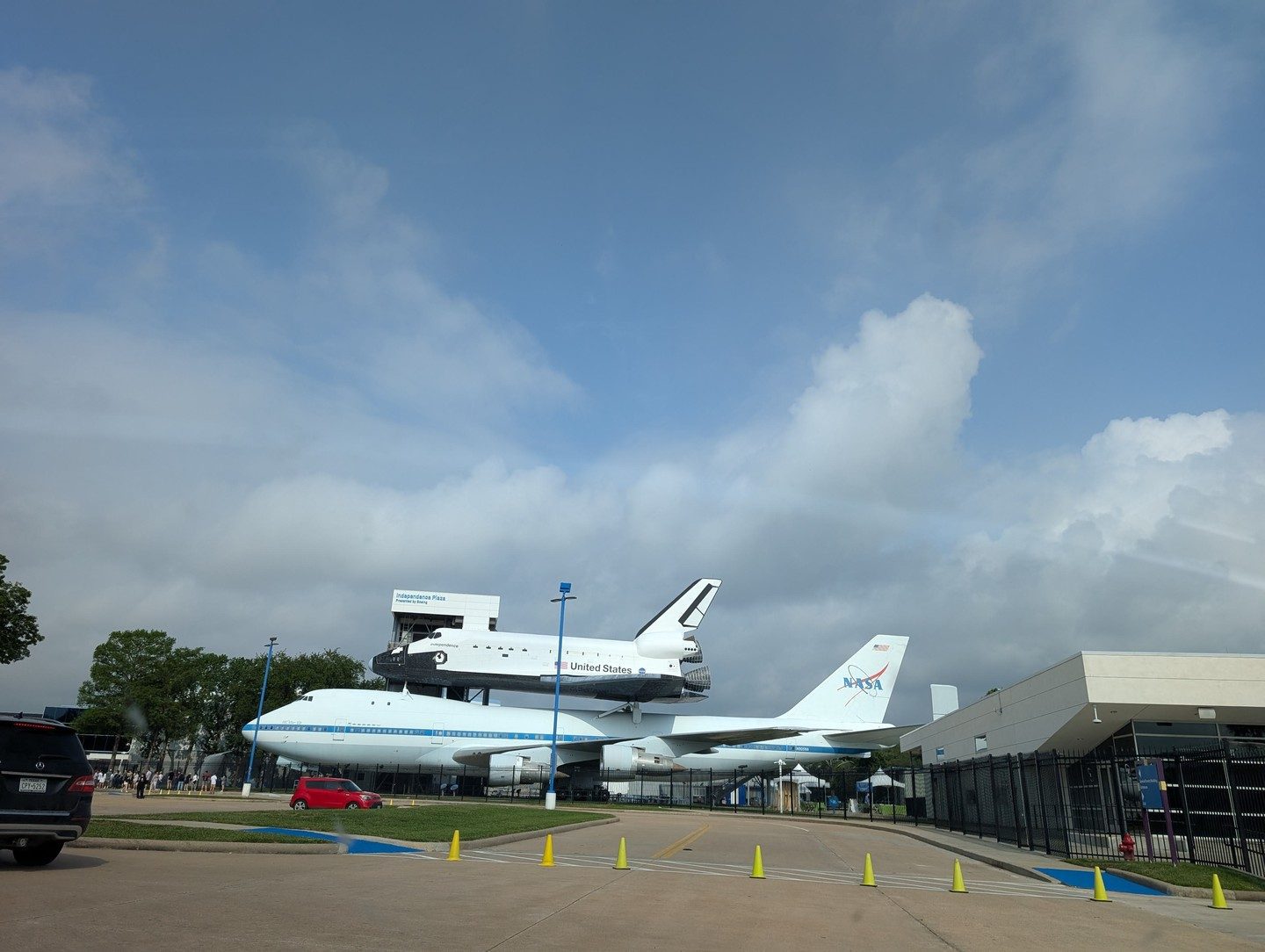
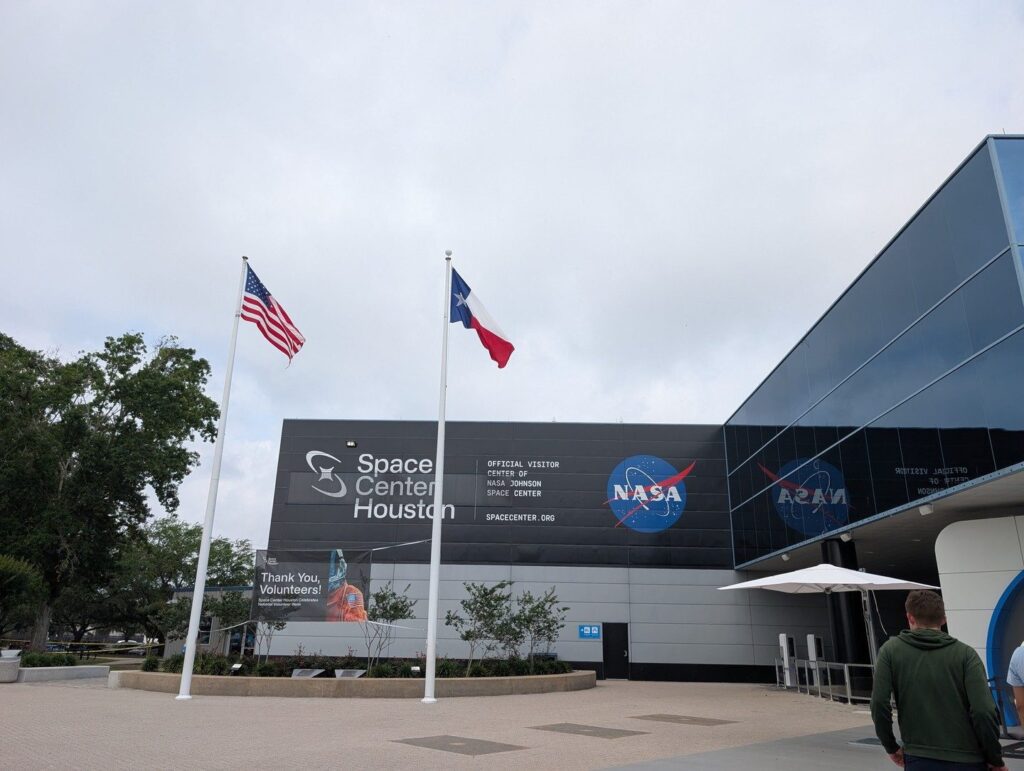
Space Center Houston is the official visitor center of NASA Johnson Space Center and one of the most impressive family attractions in the country. We visited with our 10-year-old on a busy spring weekend and spent just over three hours there — which felt like the right amount of time for that age, though you could easily fill four or five hours if your kids want to go deeper. Here is everything we learned, including the ticket tips that make a real difference.
Quick Summary
- Best for: Families with kids ages 7 and up; especially strong for kids 9 to 14
- Time needed: 3 hours minimum; 4 to 5 hours if you want to do everything at a relaxed pace
- Do not miss: NASA Tram Tour, Saturn V rocket, Independence Plaza
- First thing to do on arrival: Book your tram tour slot — before you see anything else
- Address: 1601 E NASA Pkwy, Houston, TX 77058
- Parking: On-site, $10 per vehicle
- Website: spacecenter.org
Tickets: Buy Online and Buy Early
This is the most important section of this post. How you buy your tickets has a direct impact on how much you pay and whether you get access to the tram tour on your preferred day.
Buy tickets online at spacecenter.org at least a few days before your visit, ideally a week or more in advance if you are visiting on a weekend or during school holidays. Online tickets are cheaper than the walk-up window rate, and buying in advance lets you select a timed entry slot that guarantees your entry time.
The standard general admission ticket covers all exhibits plus the NASA Tram Tour, which takes you out onto the actual Johnson Space Center campus. The Mission Control add-on is a separate upgrade that requires advance reservation — this sells out fast on weekends, sometimes by mid-morning on the day of your visit. If Mission Control is on your list, buy and reserve that slot when you purchase your tickets online, not as an afterthought at the gate.
Ticket Tips That Actually Help
- Buy online, not at the door. The price difference is real and the door queues can be long on busy days.
- Book Mission Control in advance. It cannot be added on the day once slots are gone. If you care about seeing it, lock it in when you buy your main tickets.
- Download the Space Center Houston app before you arrive. It has a "Join tram virtual line" feature that lets you reserve your tram boarding slot from your phone the moment you enter. This is faster than finding the Guest Services desk on a busy day.
- Check for discount codes before buying. Educator discount codes are sometimes available and apply to the whole party. Search current codes before checkout — they appear and expire regularly.
- Consider the Houston CityPASS if you plan to visit multiple Houston attractions. It bundles Space Center Houston with several others and saves meaningfully if you hit three or more included spots.
- Tram tours can be canceled in rain. The trams are open-air vehicles. Check the Houston weather forecast before your visit — morning slots are safer if afternoon thunderstorms are possible, which is common in summer.
The Most Important Rule: Book Your Tram Tour First
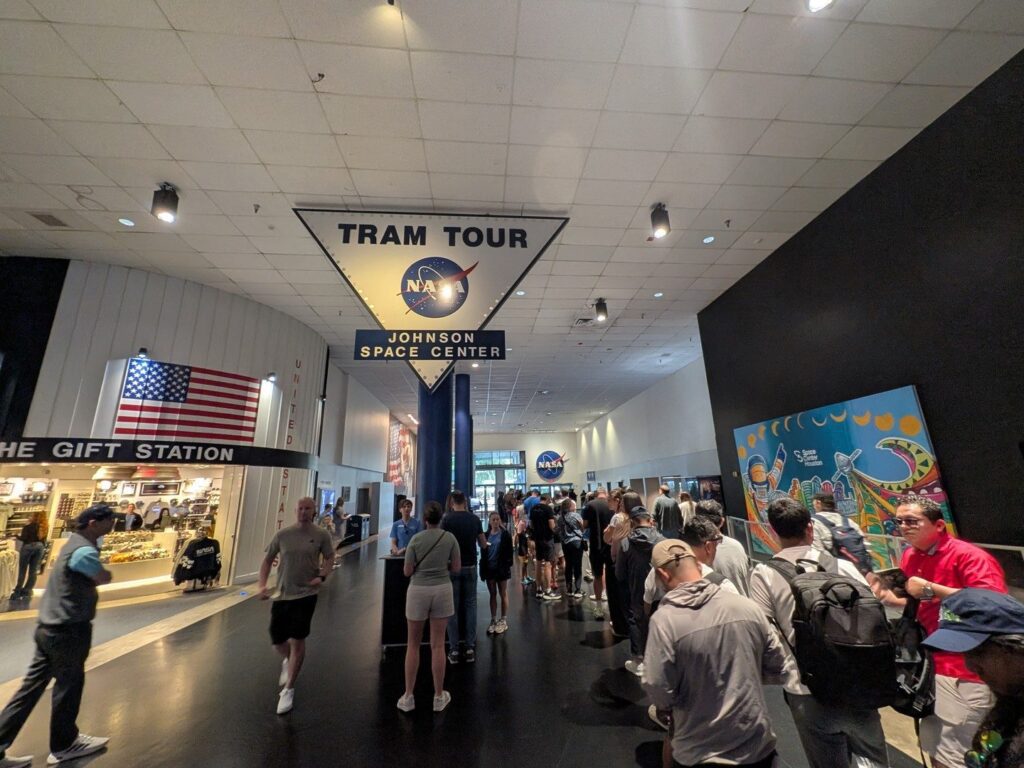
The moment you walk through the entrance, go directly to the tram boarding area or open the Space Center Houston app and join the virtual queue. Do not stop to look at exhibits, do not browse the gift shop, do not get food. Tram tour slots are the scarcest resource at Space Center Houston on a busy day and they sell out.
The NASA Tram Tour takes you outside the visitor center and onto the Johnson Space Center campus itself, which is an active federal facility. You pass working NASA buildings, see the astronaut training areas from the tram, and are dropped at the Saturn V rocket building and Rocket Park before returning. This is the piece of the visit that separates Space Center Houston from any other science museum — you are actually at NASA, not just looking at displays about it.
Trams depart every 15 to 20 minutes depending on the day. The Guest Services desk near the entrance can book your slot, or the app handles it from your phone.
What to See on the NASA Tram Tour
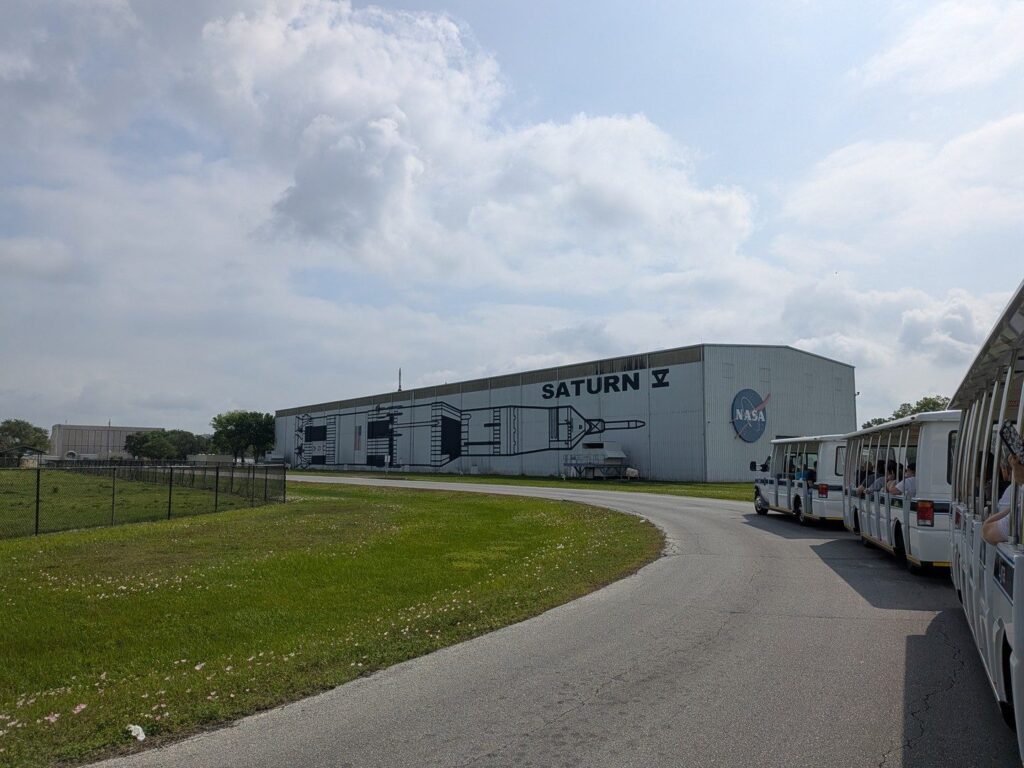
The tram takes you through the Johnson Space Center grounds with narration explaining what each building is used for. Buildings you pass include Mission Control (if included in your ticket), astronaut training facilities, and the neutral buoyancy laboratory where astronauts train for spacewalks underwater. You cannot enter most of these from the outside, but seeing the actual working campus puts everything else in context.
One detail that caught us completely off guard: there is a Texas longhorn living on the NASA campus, visible from the tram as it passes. Our 10-year-old was equal parts confused and delighted. It is a genuine NASA mascot and has been a campus fixture for years. Worth knowing so you have your camera ready.
The tram stops at the Saturn V building and Rocket Park before returning to the main visitor center. Plan to spend significant time at both stops rather than rushing back.
Saturn V: The Most Jaw-Dropping Thing at Space Center Houston
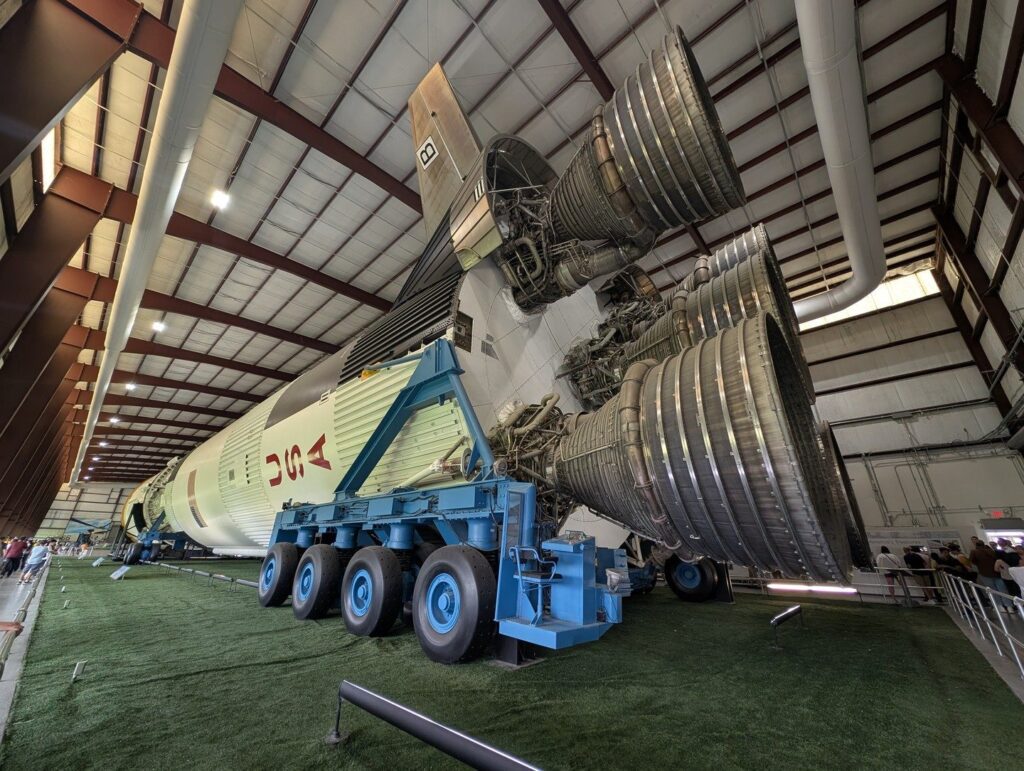
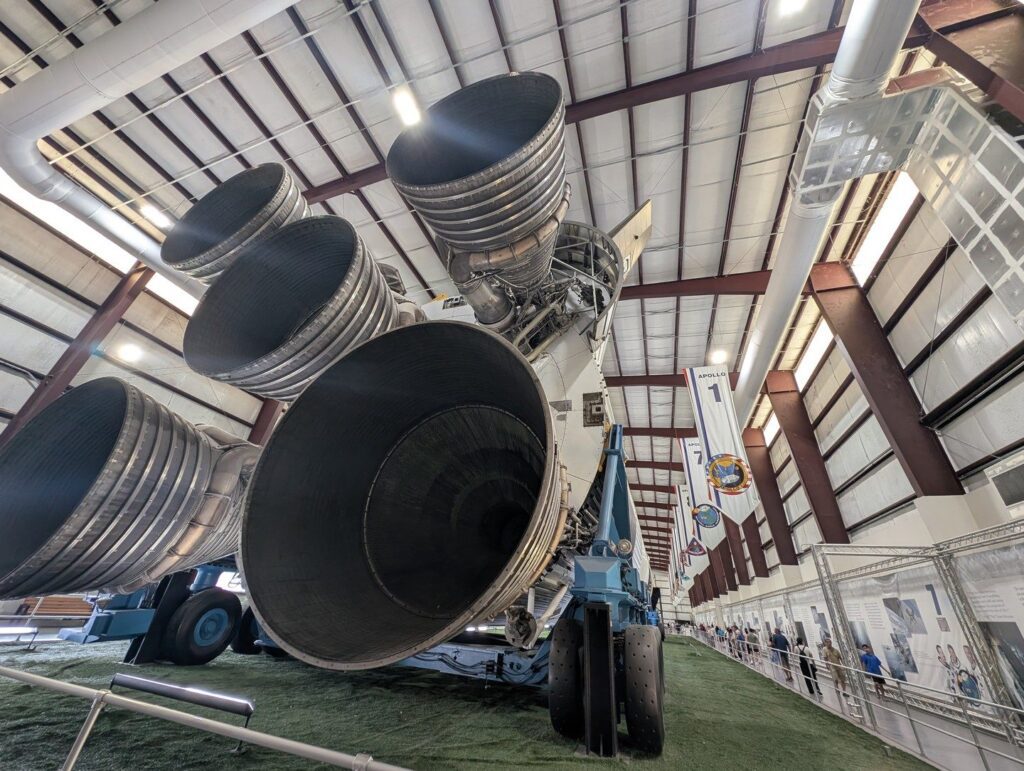
Nothing at Space Center Houston prepares you for the Saturn V until you are standing next to it. The rocket is 363 feet long — taller than the Statue of Liberty — and lies horizontal inside a dedicated building on the NASA campus. You walk the length of it along a raised walkway, passing the five massive F-1 engines at the base, up through the body stages, to the Apollo capsule at the tip.
The scale is genuinely difficult to process. The F-1 engine bells are each about 12 feet in diameter. You can stand directly next to them and look up into the combustion chambers. Above the rocket, the building is hung with mission banners from Apollo 1 through Apollo 17. The combination of the physical rocket and that historical context makes this one of the most affecting exhibits we have encountered at any attraction.
Budget 20 to 30 minutes here. Kids tend to walk slowly through it because there is so much to take in at every step.
Rocket Park: Upright Rockets Outside
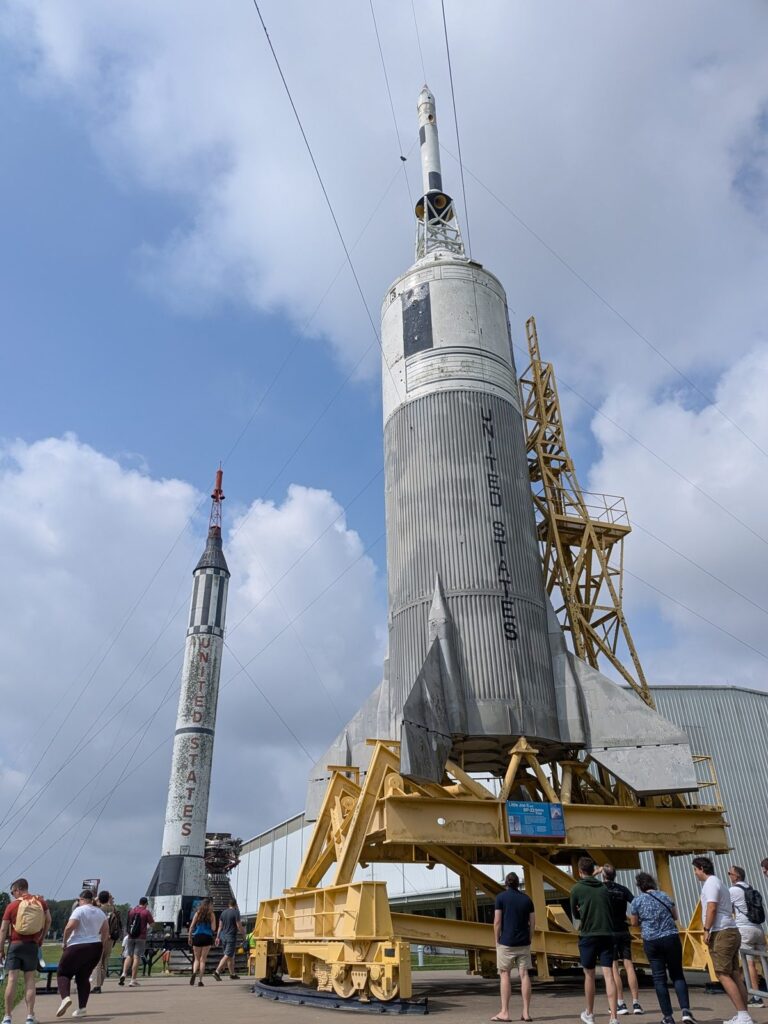
Adjacent to the Saturn V building is Rocket Park, an outdoor area where several rockets stand upright as they would have on a launch pad. The Mercury-Redstone and Little Joe II are the main display pieces here — actual rockets from the early American space program, weathered and real. Standing at the base of a rocket pointing at the sky with the NASA campus stretching out behind it is one of those moments that photographs well and feels even better in person.
Independence Plaza: The Shuttle on the 747
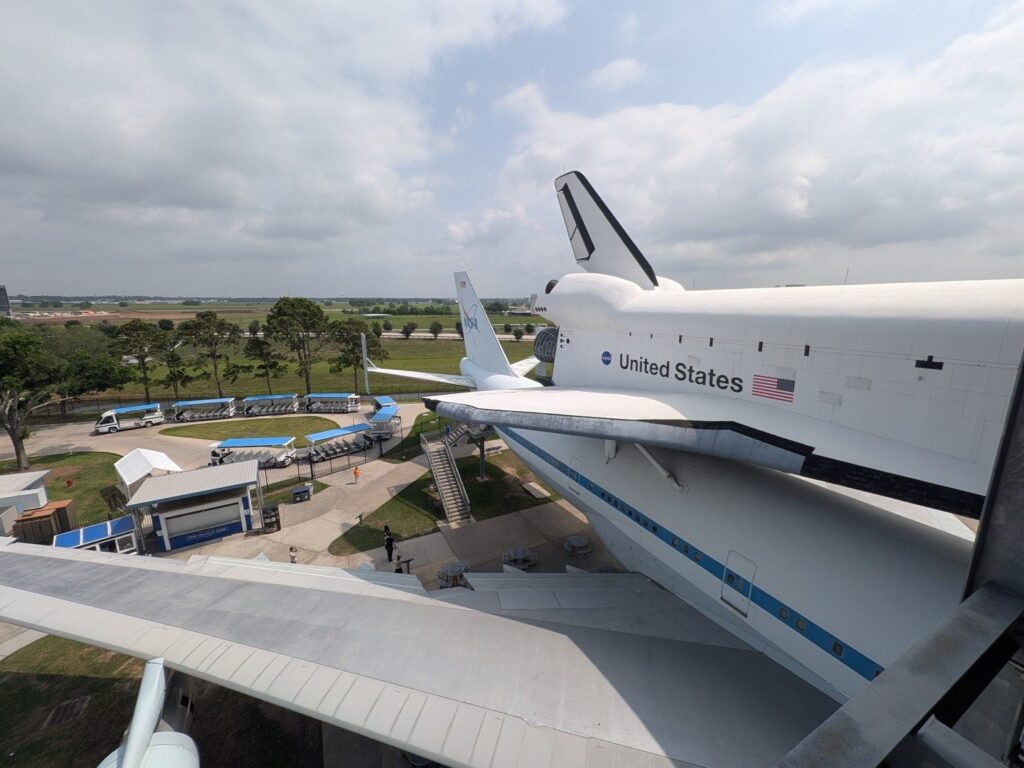
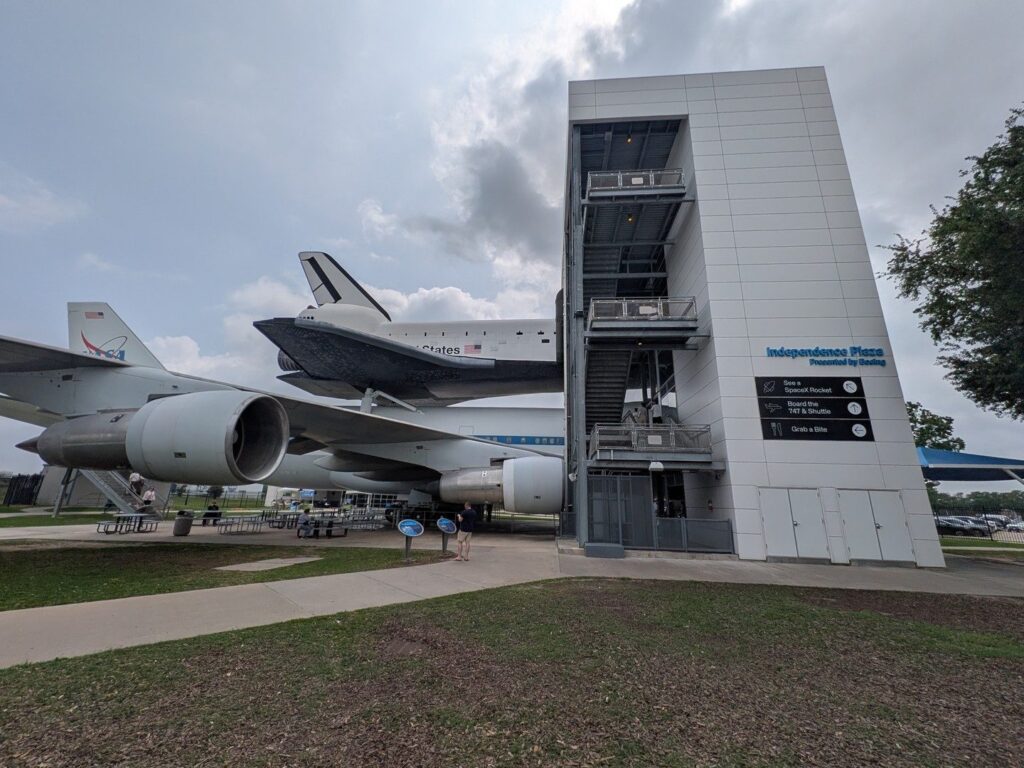
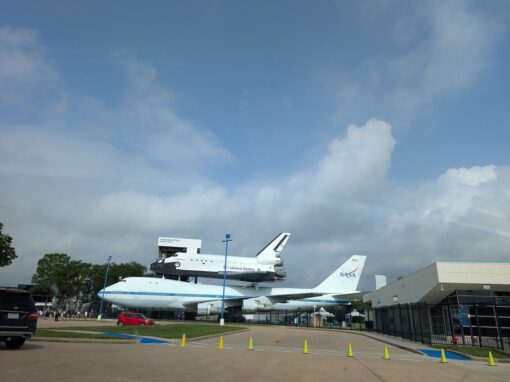
Independence Plaza is the other unmissable section and is located back at the main visitor center. It is a full-scale space shuttle replica (Independence) mounted on top of a real NASA 747 Shuttle Carrier Aircraft — the actual plane that ferried space shuttles across the country. You can walk through both the shuttle and the aircraft on multiple levels via an elevator tower.
Being inside the 747 while a shuttle sits on top of it is a strange and impressive experience. The view from the upper level, looking out over the NASA campus from the shuttle's wing height, is one of the better photo opportunities at the park. The SpaceX Falcon 9 booster on display nearby tends to go unnoticed by many visitors — it is worth a few minutes if your family follows the current space program.
Main Exhibits Inside the Visitor Center
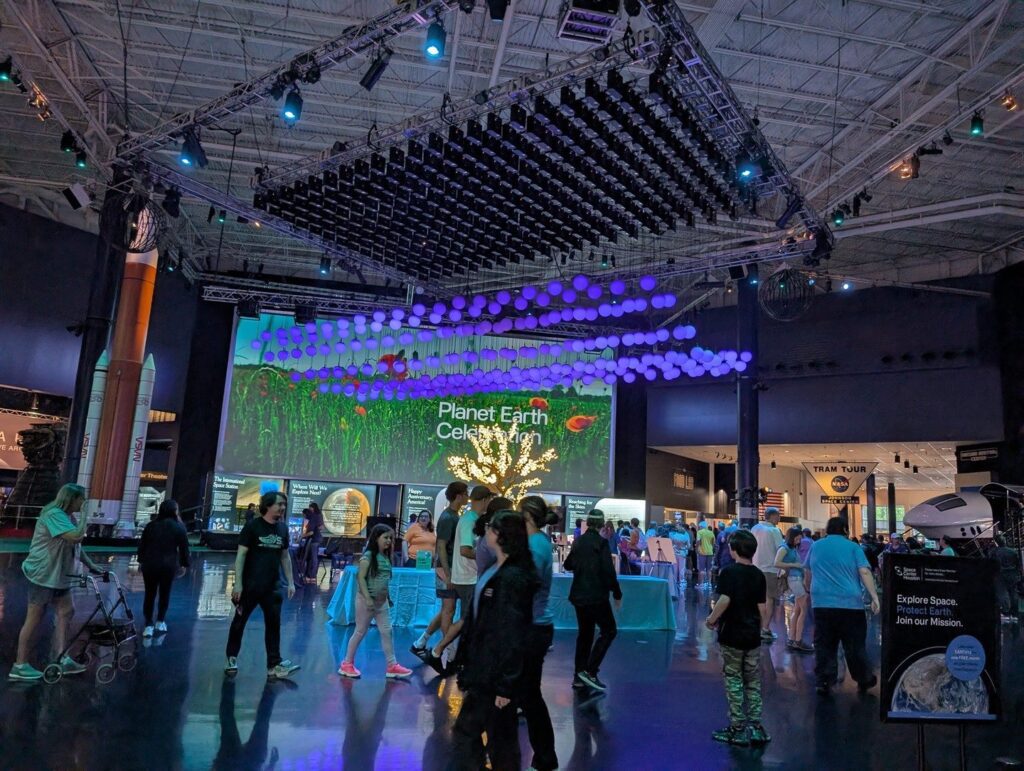
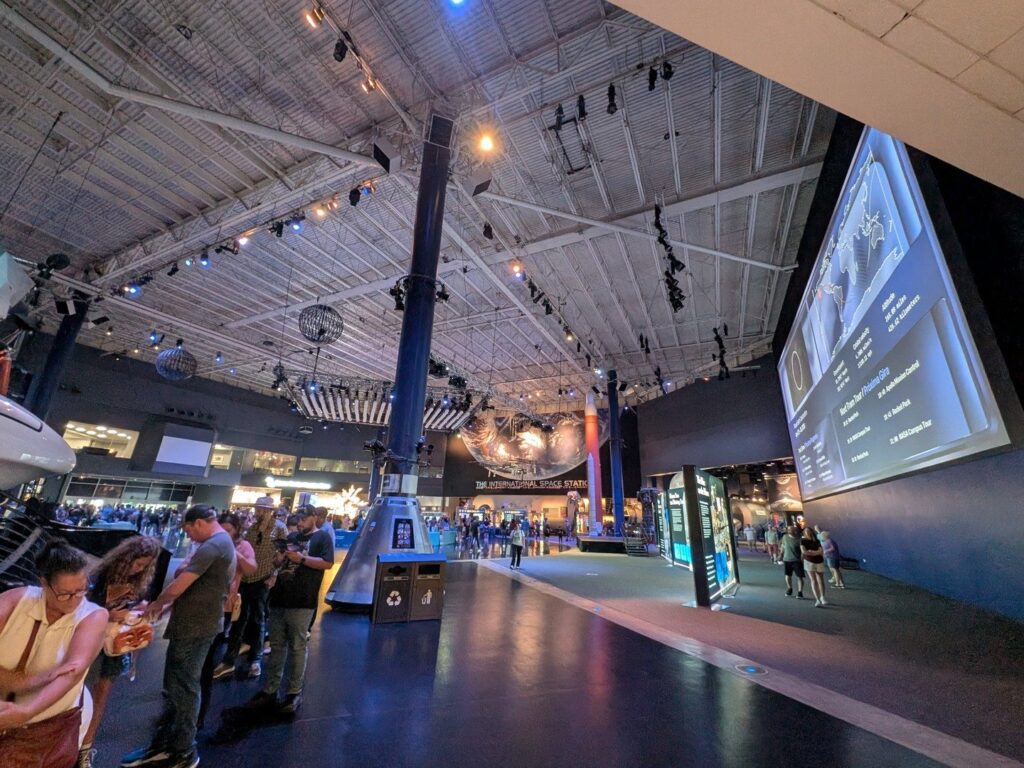
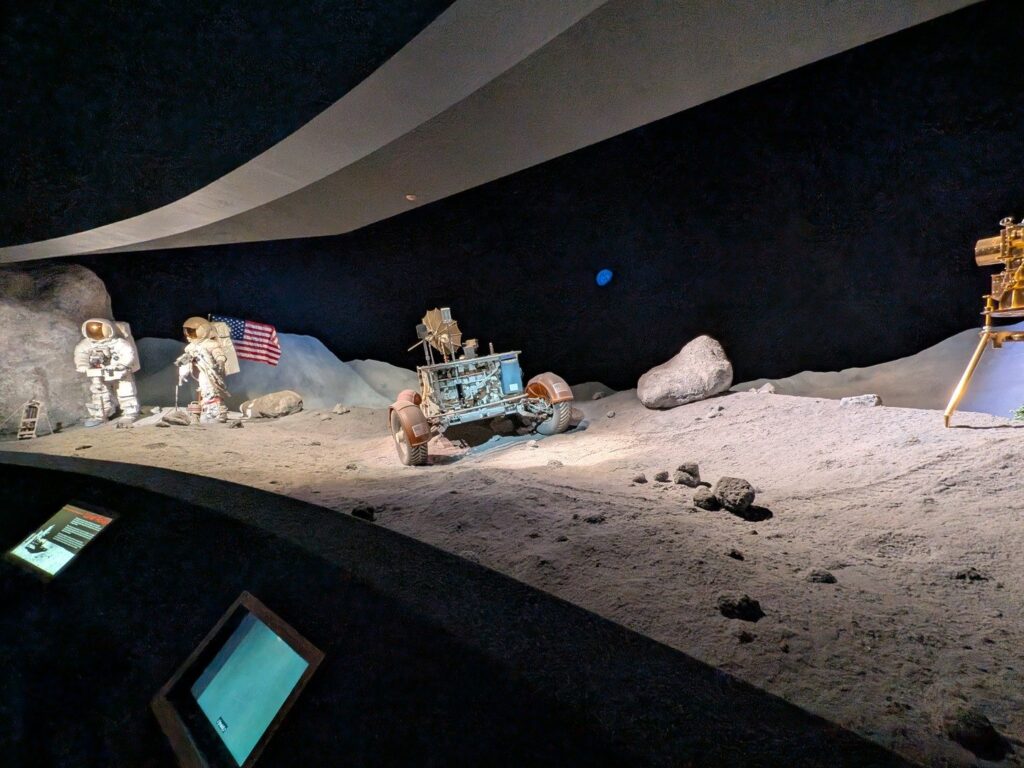
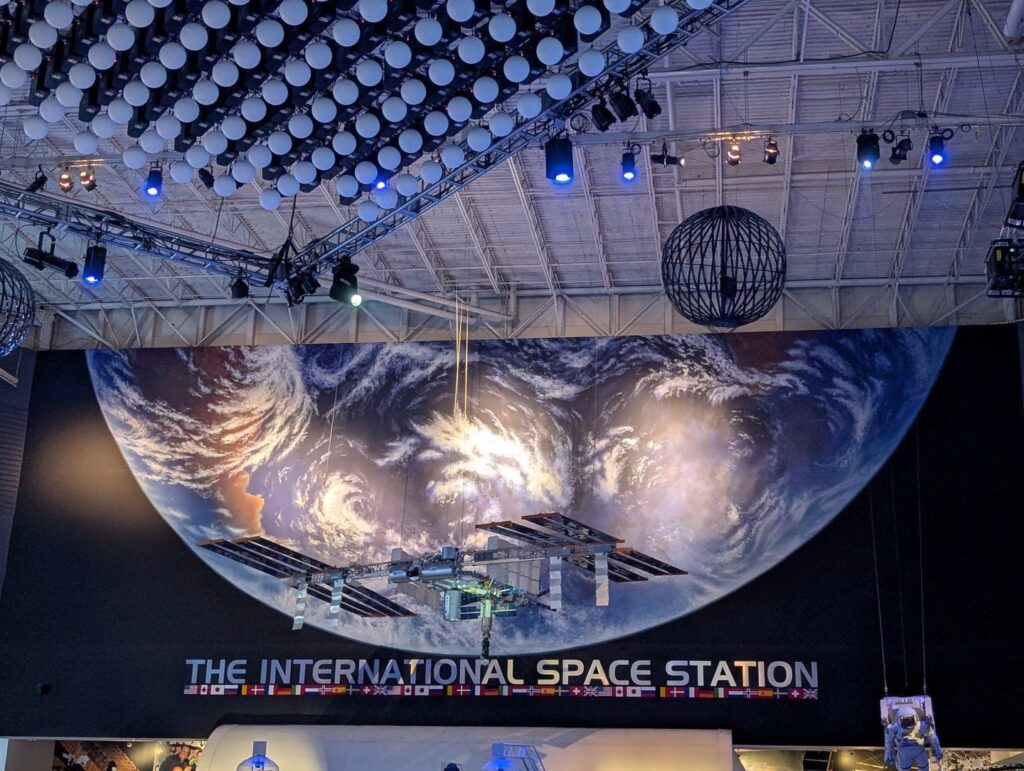
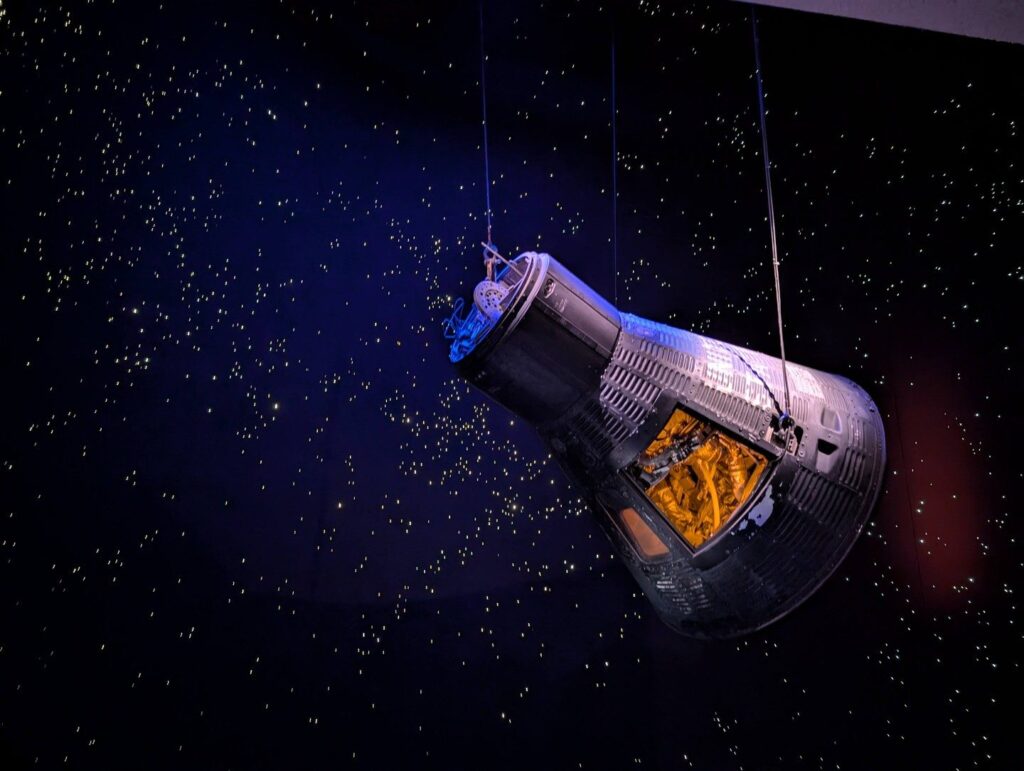
The main building holds a substantial collection of exhibits across multiple areas. Highlights include:
- Lunar surface diorama — a detailed recreation of the Apollo lunar landing environment with full-scale astronaut figures, American flag, lunar rover, and lunar module. The lighting and staging make this genuinely impressive for all ages.
- Mercury and Gemini capsule displays — actual capsules suspended against starfield backdrops. Seeing how small these vehicles were gives immediate context for how much the astronauts took on.
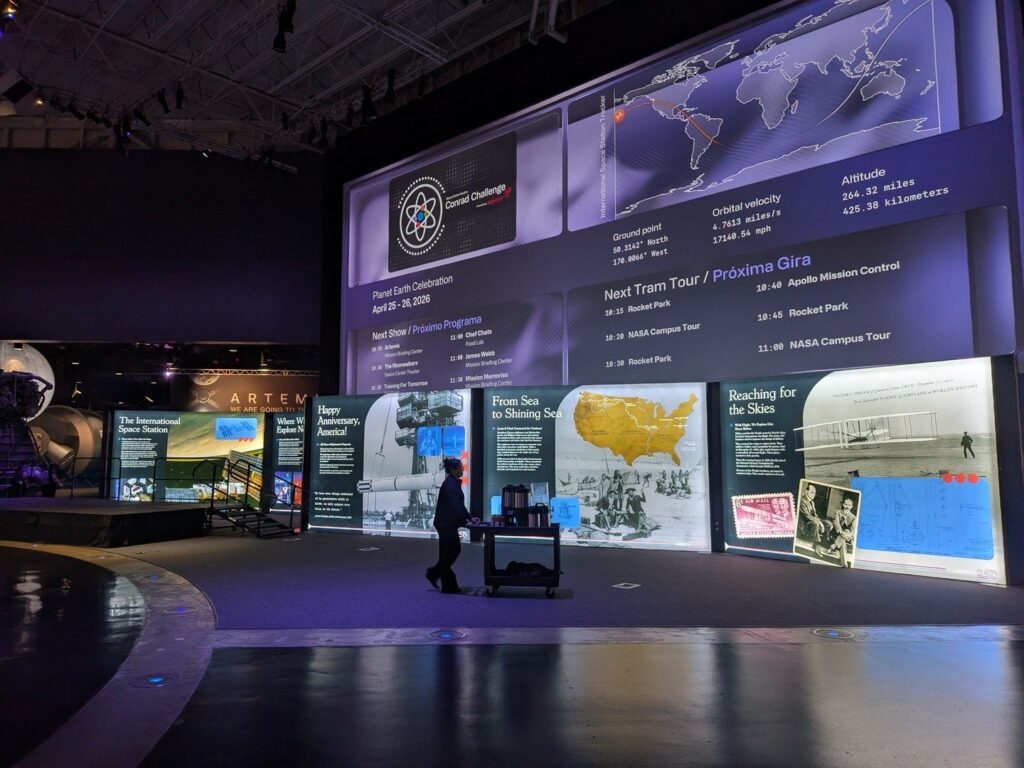
- International Space Station exhibit — a large-scale ISS model suspended above a curved Earth backdrop, with live ISS telemetry showing the station's current position, altitude, and orbital speed.
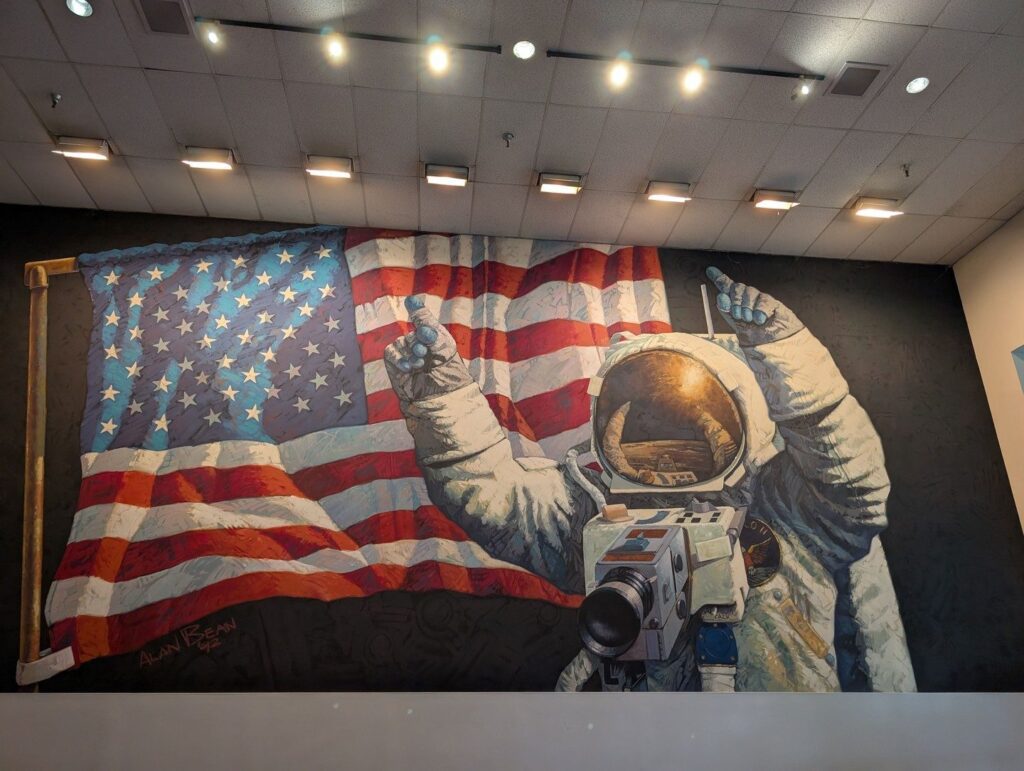
- Alan Bean mural — a striking floor-to-ceiling painting by astronaut Alan Bean, who walked on the Moon during Apollo 12 and later became a painter. Seeing work by someone who was actually there is worth pausing for.
- Mission Briefing Center — regular presentations covering current NASA programs including Artemis. The schedule is posted on the main board near the tram area when you enter.
Food at Space Center Houston
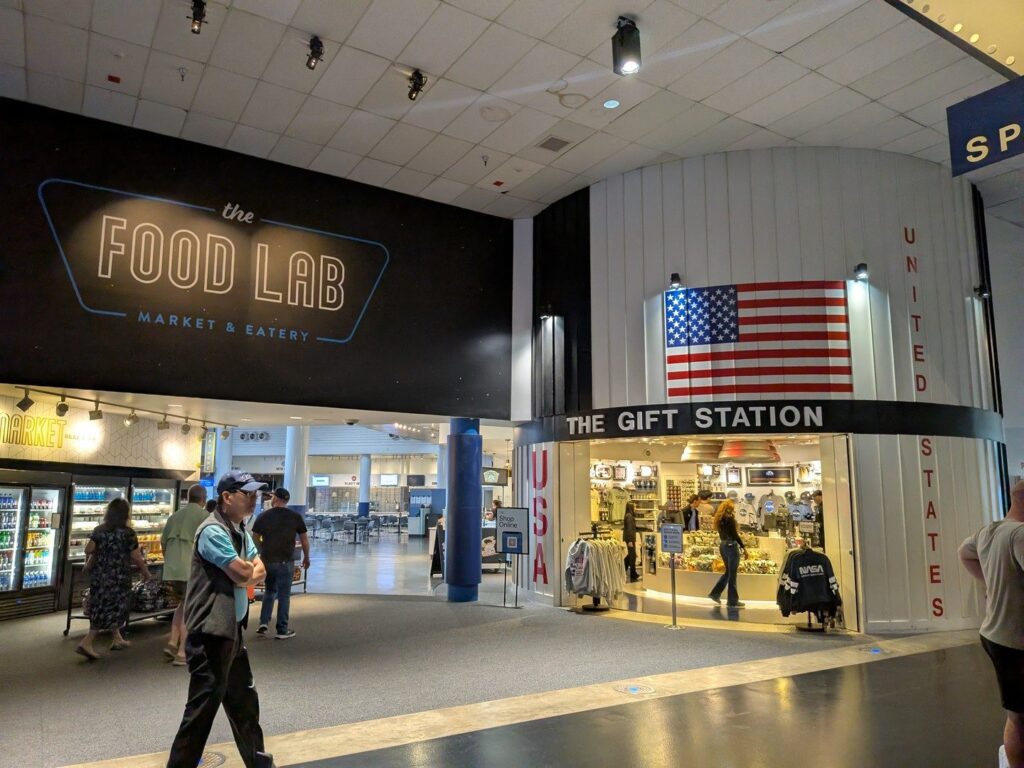
The on-site restaurant is called the Food Lab Market and Eatery, located in the main visitor center. It offers burgers, sandwiches, Tex-Mex items, and grab-and-go options. The food is standard theme park fare — functional and convenient but not a dining destination. Prices are in line with what you would expect at a major attraction.
If your visit timing is flexible, eating before you arrive or after you leave is a better option for food quality. The Museum District, where many families stay when visiting Houston, has much better dining options within a short drive.
Traveling with Food Allergies
The Food Lab has standard quick-service ordering, which means ingredient transparency depends on which staff member you reach. For families managing food allergies, the safest approach is to ask a manager directly about specific items before ordering rather than relying on posted menus alone. Grab-and-go packaged items typically have full ingredient labels and are the lower-risk option for snacks.
If your child has multiple or severe allergies, eating a meal before you arrive and packing safe snacks is the most reliable approach. The visitor center allows outside snacks and you will not go hungry between exhibits.
Practical Tips for Visiting with Kids
- Arrive at opening time. The tram queue and Mission Control slots fill quickly on weekends. Being at the gate before the park opens is the best way to have the most flexibility with your day.
- Wear comfortable shoes. The Saturn V building and Rocket Park involve significant walking. The Independence Plaza elevator and walkways add more. You will cover more ground than you expect.
- Best age range: Kids from about 7 to 14 get the most from this visit. Younger children will enjoy the scale and visuals but may not engage with the historical content. Teens who have any interest in science or engineering will find it genuinely impressive.
- The gift shop is at the exit. Set expectations with your kids before you go in — the Gift Station is well-stocked with NASA merchandise, models, and freeze-dried astronaut ice cream. Budget a few minutes and a few dollars if your kids are likely to want something.
- Spring and early morning visits are the most comfortable weather-wise. Houston summers are hot and humid, and the Rocket Park and tram sections are exposed. Sunscreen and water bottles are recommended any time of year.
- Check for special events. Space Center Houston runs themed weekends and educational events throughout the year. The main hall stage area is used for presentations and live programming that adds value on top of the standard exhibits.
How Long Does Space Center Houston Take?
We spent just over three hours and covered everything on this list at a comfortable pace with a 10-year-old. That included the full tram tour, walking the Saturn V, Independence Plaza, and the main indoor exhibits. Three hours felt right for that age — engaged without becoming overwhelming.
If you have older kids or adults who want to read every exhibit panel, attend a Mission Briefing Center presentation, and spend more time in the capsule gallery, four to five hours is realistic. If you are visiting with younger children who have shorter attention spans, two to two and a half hours covers the headline stops without pushing it.
Frequently Asked Questions
Is the NASA Tram Tour included in general admission?
Yes, the tram tour to the Johnson Space Center campus is included with a standard general admission ticket. The Mission Control experience is a separate paid add-on that requires advance reservation and sells out on busy days.
How far in advance should you buy Space Center Houston tickets?
At minimum, buy a few days in advance for weekday visits. For weekend visits during spring break, summer, or school holidays, one to two weeks ahead is safer. This ensures you get your preferred entry time and can add Mission Control before it sells out.
Is Space Center Houston worth it for a 10-year-old?
Yes, without hesitation. The combination of actual NASA hardware, the working campus tram tour, and the scale of the Saturn V makes it unlike any science museum. A 10-year-old with any interest in science, history, or space will find it genuinely engaging rather than just educational.
Is there parking at Space Center Houston?
Yes. On-site parking is available and costs $10 per vehicle. It is well-organized and easy to navigate. The lot is large enough that finding a spot is not typically an issue even on busy days.
Can you eat at Space Center Houston?
Yes. The Food Lab Market and Eatery is the main on-site restaurant with quick-service food. For better food quality, eat before or after your visit — the surrounding Clear Lake area has more options nearby.
Is Space Center Houston stroller-friendly?
The main visitor center and most indoor exhibits are accessible. The NASA campus tram portion involves boarding and exiting the tram, and the Rocket Park outdoor area is paved. Strollers are manageable throughout the visit.
Final Verdict
Space Center Houston is one of the few attractions we would describe as genuinely unmissable when you are in Houston with kids. The Saturn V alone justifies the trip. The tram tour, the shuttle on the 747, and the depth of the exhibits add up to a full day that our family talked about long after leaving.
The single most important thing to take from this post: buy your tickets online in advance and book your tram tour slot the moment you walk in. Those two actions determine the quality of your visit more than anything else.
If you are building a Houston itinerary, Space Center Houston works well as a morning anchor. The drive from the Museum District takes about 35 minutes, making it an easy day trip from there.



0 Comments